

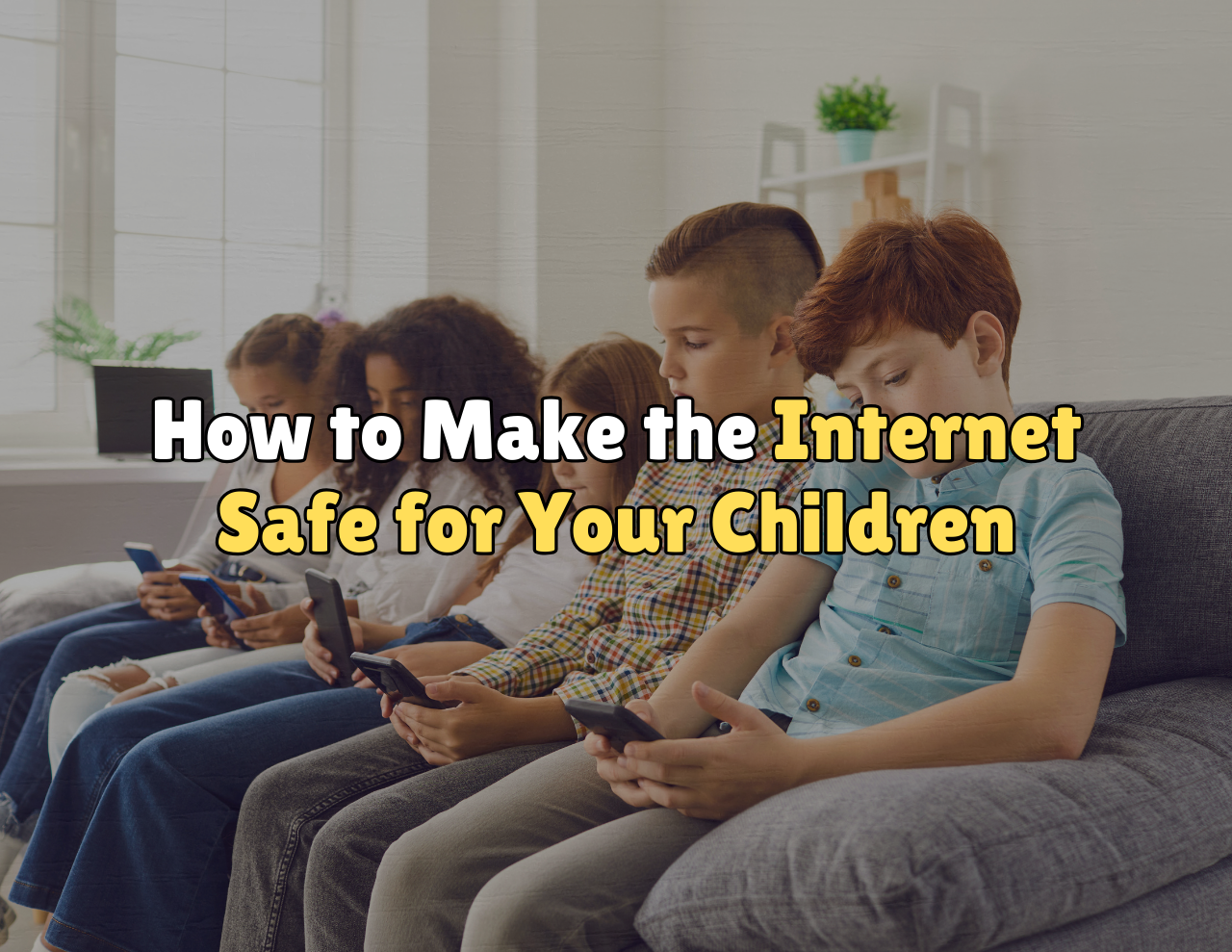
Since the internet has become an essential part of communities all over the world, the question is not how to help kids avoid it, but rather how to teach them about its risks.
Before allowing children to use technology unsupervised, they should be aware of these guidelines.
Cyberbullying: Report offensive conduct online and abstain from it.
Teaching children about the negative effects of online negativity at an early age is the best way to mitigate the effects of cyberbullying. Start by educating children about the signs of cyberbullying:
- Promoting false information or rumors
- Sharing someone else’s personal information in public
- Motivating another individual to injure themselves
- Putting offensive pictures or remarks online
Avoid downloading anything without authorization

The victim can download and install ransomware, spyware, and malware through an encrypted link or network.
These are frequently social media and email scams that can infect, steal, or carry out almost any action the attacker desires, such as accessing webcams, gathering personal information, or even holding specific files for ransom.
There are several ways to get malicious software online.
- Applications for mobile devices
- malicious websites
- malicious emails
- Phishing links
- Text messages
- Caller scams and voice phishing
Avoid clicking on dubious links to avoid clickbait
Children are susceptible to clickbait, or content that persuades them to visit a website that is infected with a virus, just like adults are.
In fact, some clickbait actually warns of viruses and suggests downloading a different kind of software to keep your computer safe.
There are scams everywhere on the internet, and simply visiting a malicious website can infect a computer with a virus in a matter of seconds.
Phishing: Avoid disclosing private information
Even if you believe you know someone, sharing personal information with them online can be extremely dangerous.
Phishing scams, for instance, ask victims to confirm certain personal information, and then use that information to gain access to personal accounts or documents.
Never disclose credit card or bank account details online.
Online predators: Be careful who you choose as “friends.”
Adults need to be involved in their children’s online relationships. Locate or establish a secure space where people can talk about any worries they may have about online safety.
Children may find it difficult to maintain any previously set boundaries if they do not comprehend the seriousness of the situation.
Describe which online activities children should stay away from and why.
Children should know that any online persona can be a fake and that they should avoid chatting with strangers on social media, chat apps, and, most importantly, over the phone or via video calls.
Misinformation: Verify the accuracy of the information you read online
Not all of the information that is out there is accurate. To ensure that the information they read and learn online is reliable, children must understand how to locate and verify information from a variety of sources.
Personal Data: Recognize when to refrain from disclosing personal data
When posting or interacting with someone online, excessively disclosing personal information can have detrimental consequences. Tell children not to post or share any of the following:
- When they spend a lot of time at home by themselves.
- Where they reside.
- Where they attend school.
- The timetable for their classes and school
- Compromising their own images.
- Credentials or login details.
Conclusion
One of the first steps in teaching kids internet safety is identifying typical risks they may encounter online. Unfortunately, children are at risk from a variety of threats, including scammers, cyberbullies, and online predators.






10 Everyday Tasks AI Will Replace by 2030
According to predictions, artificial intelligence will subtly change daily life by 2030,...
 easyupdatemedia2 Mins read

Top Chrome Extensions to Boost Your Efficiency
The Chrome Store is a vast collection of extensions that can do...
easyupdatemedia2 Mins read
How AI Assistants Are Replacing Virtual Assistants
The emergence of virtual assistants with artificial intelligence (AI) has significantly changed...
easyupdatemedia2 Mins read
How Hackers Use AI and How to Protect Yourself
For seven decades, artificial intelligence has been developing. AI research began in...
easyupdatemedia2 Mins read



Leave a comment